
For Parents
What Age Should Children Start Tennis?
A parent's guide to introducing children to tennis — and helping them enjoy the game from the beginning.
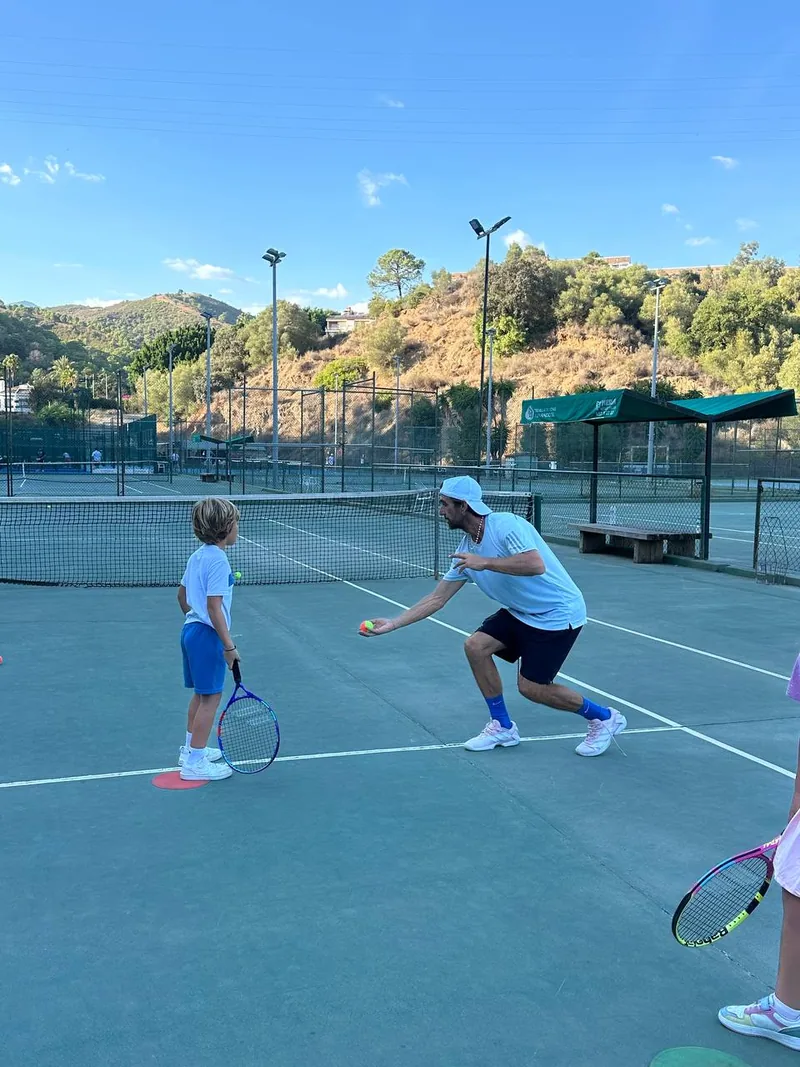
If you're thinking about tennis lessons for your child, one of your first questions is probably: Are they old enough to start?
The short answer? Many children can begin discovering tennis around age four or five. But there's no single perfect age to start.
What matters most is how tennis is introduced. For younger children, the first experience should be about having fun, moving, playing with a ball and building confidence — not perfecting a forehand or winning matches.
And if your child is already eight, ten or twelve and has never picked up a racket? That's absolutely fine too.
These age bands are general guidance, not Rhino admission ages. Contact the academy to discuss suitable options for your child.
Tennis at different ages: What to expect
Ages 3–4: Discovering movement and play
At this age, tennis-related games can introduce children to throwing, catching, running, balancing and tracking a ball.
Think balloons, soft balls, simple targets and playful movement activities.
The goal isn't to learn tennis technique. It's to become comfortable moving, playing and interacting with balls and rackets.
For very young children, parent-child activities can be a particularly enjoyable introduction.
Ages 4–6: First steps on the tennis court
This is a common age for children to start organised, age-appropriate tennis activities.
With smaller rackets, softer balls and appropriately sized playing areas, children can begin developing:
Hand-eye coordination
Balance and movement
Basic racket and ball control
Listening and taking turns
Confidence through small achievements
A good early experience might involve more games than traditional tennis drills. That's exactly the point.
At this stage, having fun is part of learning.
Ages 7–9: Building skills and confidence
Children in this age range may be ready to develop more recognisable tennis skills.
They can begin learning how to:
Hit forehands and backhands
Rally with a partner
Move into position
Aim towards targets
Understand simple scoring and rules
Activities should still be engaging and adapted to each child's experience.
It's also a great time for children to discover the social side of tennis — playing with others, practising together and learning to handle both successes and mistakes.
Ages 10–12 and older: It's not too late!
Some parents worry that if their child hasn't started tennis by age six, they've already missed an important opportunity.
They haven't.
Older beginners can bring their own strengths: better coordination, improved concentration and a greater ability to understand instructions.
The starting point should reflect their experience, confidence and interests, rather than simply their age.
Whether your child dreams of playing competitively or just wants a new sport to enjoy, there's a place for beginners beyond the early years.
How do you know if your child is ready for tennis lessons?
Age is only one consideration.
Here are four useful signs:
1. They're curious about the game. They enjoy hitting, catching or chasing balls — or simply want to try something new.
2. They enjoy movement and games. They don't need to be particularly athletic. A willingness to join in is enough to begin.
3. They're comfortable trying things. They may miss the ball repeatedly, especially at first. A supportive environment helps them learn that making mistakes is normal.
4. They can participate in an age-appropriate activity. Young children don't need to concentrate for an entire traditional lesson. Activities should be adapted to their attention span.
And if you're still unsure? Trying an introductory session can help you see how your child responds.
Should children start with private or group lessons?
Both formats can be useful, depending on the child.
Group lessons can introduce tennis through shared games, teamwork, social interaction and learning alongside other children.
Private coaching offers more individual attention and opportunities to work at a child's own pace.
There isn't one correct choice for everyone. The most suitable starting point depends on your child's confidence, experience and goals.
How can parents help children enjoy tennis?
You don't need to be a tennis player yourself.
You can make a difference by keeping things simple:
Celebrate effort, not just successful shots.
Ask whether your child enjoyed playing, rather than whether they won.
Let them explore different games and activities.
Avoid comparing their progress with other children.
Give them time to develop at their own pace.
One of the best questions you can ask after a lesson is:
"What was your favourite part today?"
That question keeps the focus on enjoyment, curiosity and positive experiences.
So, what is the best age to start tennis?
For many children, four to six years old is a good age to begin age-appropriate tennis activities. Younger children can enjoy simple movement and ball games, while older beginners can learn successfully too.
The best starting point is when your child is interested and the activities suit their stage of development.
Early tennis doesn't need to be serious to be valuable. A positive first experience can be the beginning of a lasting enjoyment of the sport.
Discover Kids Tennis at Rhino Tennis Academy
At Rhino Tennis Academy in Estepona, Costa del Sol, we believe tennis should be welcoming, enjoyable and encouraging for players learning the game.
Whether your child is interested in trying tennis for the first time or already has some experience, we'd love to hear from you.
Explore our Kids Tennis programme or contact Rhino to discuss suitable coaching options for your child.