
For Parents
How Often Should Children Practise Tennis?
One lesson a week? Three training sessions? Every day? Here's how to find the right balance for your child.
4–5 minute read
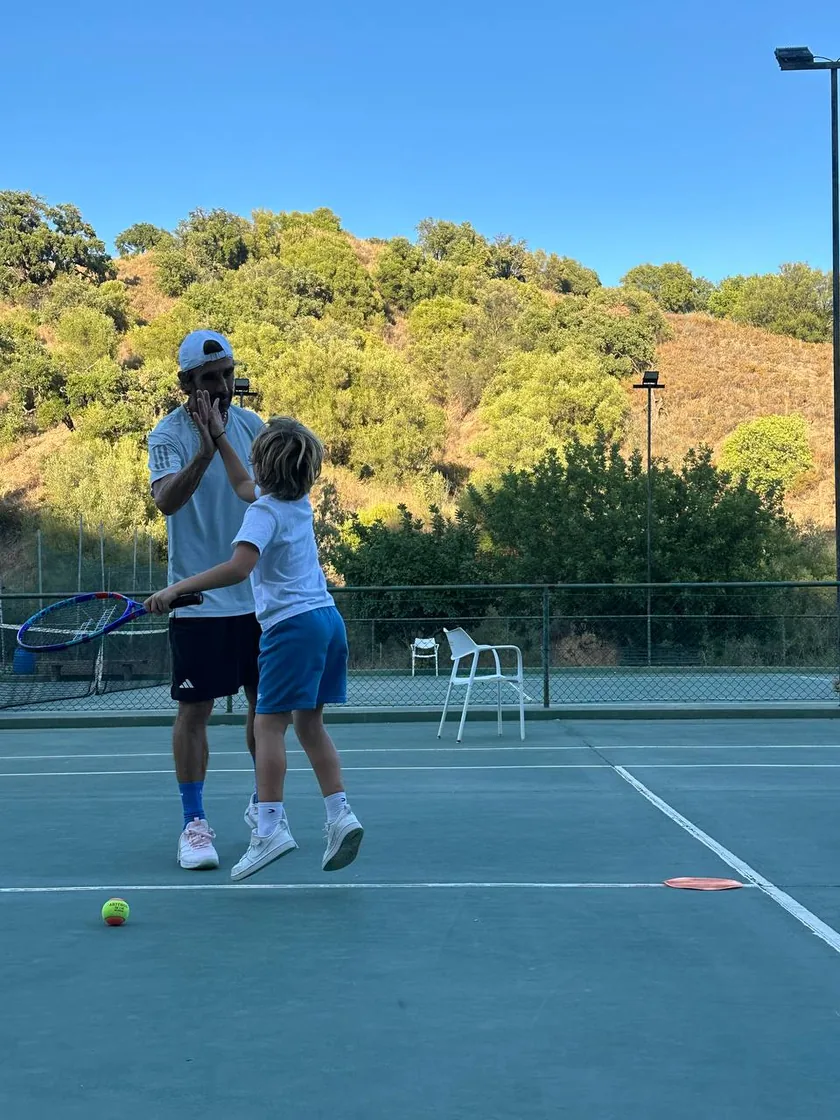
For many young beginners, one or two enjoyable tennis sessions per week can be a good starting point. The right routine depends on your child's age, interest, experience and goals.
Your child has started tennis and seems to enjoy it. They're learning new shots, making friends and getting excited when they manage a longer rally.
Naturally, you start wondering: Is one tennis lesson a week enough? Should they be practising more?
The good news is that children don't need to spend hours on court to start developing their tennis skills.
For many young beginners, one or two enjoyable tennis sessions a week can be a good starting point. As their skills, enthusiasm and ambitions grow, their practice routine can grow with them.
The important thing is finding a balance that keeps tennis fun, supports steady improvement and fits your child's life.
Is one tennis lesson a week enough?
For a child who is just starting out, one lesson a week can be perfectly reasonable.
At this stage, they're learning how to hold and control a racket, judge where the ball is going, move around the court and coordinate their movements.
These skills develop through repetition, but repetition doesn't always mean another formal lesson.
Playing catch, practising ball bounces or enjoying a simple racket game together can help children become more comfortable with a ball.
If your child is happy with one weekly session, there's no need to rush into adding more.
The ages and practice frequencies below are general examples, not Rhino admission ages or lesson schedules.
How much tennis practice is suitable at different ages?
Every child develops differently, but the following examples can help you think about a balanced routine.
Ages 4–6: Keep it playful
For younger children, tennis should feel more like playing a game than following a training programme.
One age-appropriate coaching session a week, complemented by occasional playful ball activities, may be plenty to begin with.
Useful activities include:
- Throwing and catching different balls
- Balancing a ball on a racket
- Gentle racket taps
- Running towards simple targets
- Movement and coordination games
Short, enjoyable activities are usually more helpful than asking a young child to repeat a difficult technique for a long time.
Parent tip: If your child asks to play again, that's encouraging. If they're tired or losing interest, it's fine to stop.
Ages 7–9: Build a regular routine
At this stage, many children can begin developing stronger racket control, simple rallies and basic tennis technique.
One or two coaching sessions a week can provide a useful starting routine, depending on their interest and experience.
Some children may also enjoy a little informal practice between lessons.
For example, you could spend five or ten minutes together working on a fun challenge.
It doesn't need to become a serious training session. The goal is to give your child more opportunities to enjoy using their racket.
Ages 10–12: Follow their enthusiasm
As children grow older, their interests and goals may become clearer.
Some enjoy playing tennis once a week alongside football, swimming, dance or other activities.
Others want to practise more frequently, improve their consistency or start playing matches.
For enthusiastic developing players, two or three tennis sessions across a week might be a useful arrangement to discuss with a coach.
However, this is an example, not a recommended minimum or a universal target.
A suitable routine depends on the child's experience, energy, other activities and recovery needs.
Teenagers and competitive junior players
Older players who want to compete may benefit from more structured training that combines technique, movement, tactics and match experience.
At this stage, training frequency should reflect the player's goals and individual development.
A coach can help decide how to balance organised sessions, independent practice, matches and recovery.
More training isn't automatically better if a player is consistently exhausted or no longer enjoying the sport.
What matters more: practice frequency or practice quality?
Imagine two children.
One plays tennis three times a week but spends much of the time distracted and frustrated.
The other attends one lesson, enjoys the activities and occasionally practises a favourite shot at home.
The second child isn't necessarily falling behind.
Good tennis development is not simply about counting hours.
Attention, enjoyment, appropriate challenges, coaching and opportunities to repeat skills all matter.
A focused five-minute game can be more useful than a longer session in which a child has stopped engaging.
Of course, children aiming for competitive tennis will eventually need enough practice and match experience to work towards their goals. But increasing training should be a thoughtful decision, not a race.
Can children improve their tennis at home?
Absolutely. And you don't need to be a tennis coach to help.
Try these simple activities:
1. The racket balance challenge
Place a soft tennis ball on the racket strings. Can your child walk five steps without dropping it?
2. The bounce challenge
Count how many gentle upward racket taps your child can make in a row.
3. Target practice
Choose a safe, open space and set up a few targets. Can your child roll or gently send a soft ball towards them?
4. The Rhino 20-Ball Wall Challenge
For children who can already rally safely, try our five-minute wall challenge using a suitable practice wall, soft ball and age-appropriate supervision.
The goal isn't to replace tennis coaching. It's to make playing with a ball and racket an enjoyable part of everyday life.
How do you know if your child is practising too much?
It's worth paying attention to how your child feels, not just how they're performing.
Some signs that the routine may need adjusting include:
- Regularly saying they're too tired to play
- Losing enthusiasm for activities they previously enjoyed
- Feeling unusually anxious about lessons or matches
- Complaining of persistent aches or pain
- Having little time for friends, schoolwork or other interests
A tired day doesn't necessarily mean your child is training too much. Look for patterns, talk with your child and discuss concerns with their coach.
Persistent pain shouldn't be treated as something a young player needs to push through. Stop the activity and seek appropriate healthcare advice.
Should children focus only on tennis?
Not necessarily.
Running, swimming, cycling, football, dancing and other forms of play can offer different movement experiences and social opportunities.
For younger children especially, there's no need to assume that every free afternoon should become another tennis session.
Tennis can be an important part of an active childhood without becoming the only activity a child enjoys.
The best tennis routine is one your child wants to continue
If you're wondering how often your child should practise tennis, start with three questions:
Are they enjoying it?
Are they gradually learning and gaining confidence?
Does the routine fit comfortably into their life?
If the answers are yes, you're probably heading in a positive direction.
For a beginner, one lesson a week may be a good beginning. As interest grows, adding another session or some enjoyable independent practice can make sense.
And if your child dreams of competitive tennis, a coach can help you plan a more structured approach.
The important thing is to build confidence, skills and enjoyment together.
Find the right tennis routine at Rhino Tennis Academy
At Rhino Tennis Academy in Estepona, Costa del Sol, we welcome children learning the game as well as players looking to develop their tennis skills.
Whether your child is taking their first steps on court or wants to play more regularly, get in touch with our team to discuss their experience and goals.
Explore Kids Tennis at Rhino or contact us to discuss suitable coaching options.